“Migration is Nature’s most vital survival strategy .”
~David Attenborough
LIFE
ToadAlly
Our Part
Elzéard Foundation focuses on connecting large protected areas and fragmented habitats through the development of a continuous, structural nature corridor in the tri-border area between Belgium, Germany and the Netherlands. In doing so, the necessary ecological coherence is restored that species need to move across the landscape, access suitable habitats, and maintain viable populations.
The corridor extends from the Hautes Fagnes–Eifel National Park on the Belgian-German border to the Hoge Kempen National Park and the Meuse River Park in Flanders. Through the acquisition of land, targeted habitat restoration, and the introduction of regenerative farming practices - mainly outside Natura 2000 areas - a structural and functional ecological corridor at landscape scale is established. Although physically narrow, this strategically positioned corridor reconnects natural areas, enables species to move safely across the landscape, and supports genetic exchange between populations. In doing so, it strengthens biodiversity and builds a more resilient ecosystem network for the long term.
In the period 2019–2025, Elzéard Foundation has acquired more than 150 hectares of land, restored habitats, and established a network of eco-hydrologically restored areas and ponds for the project’s target species in the micro-basins of the Berwine, Geul, Gulpe and Voer rivers.
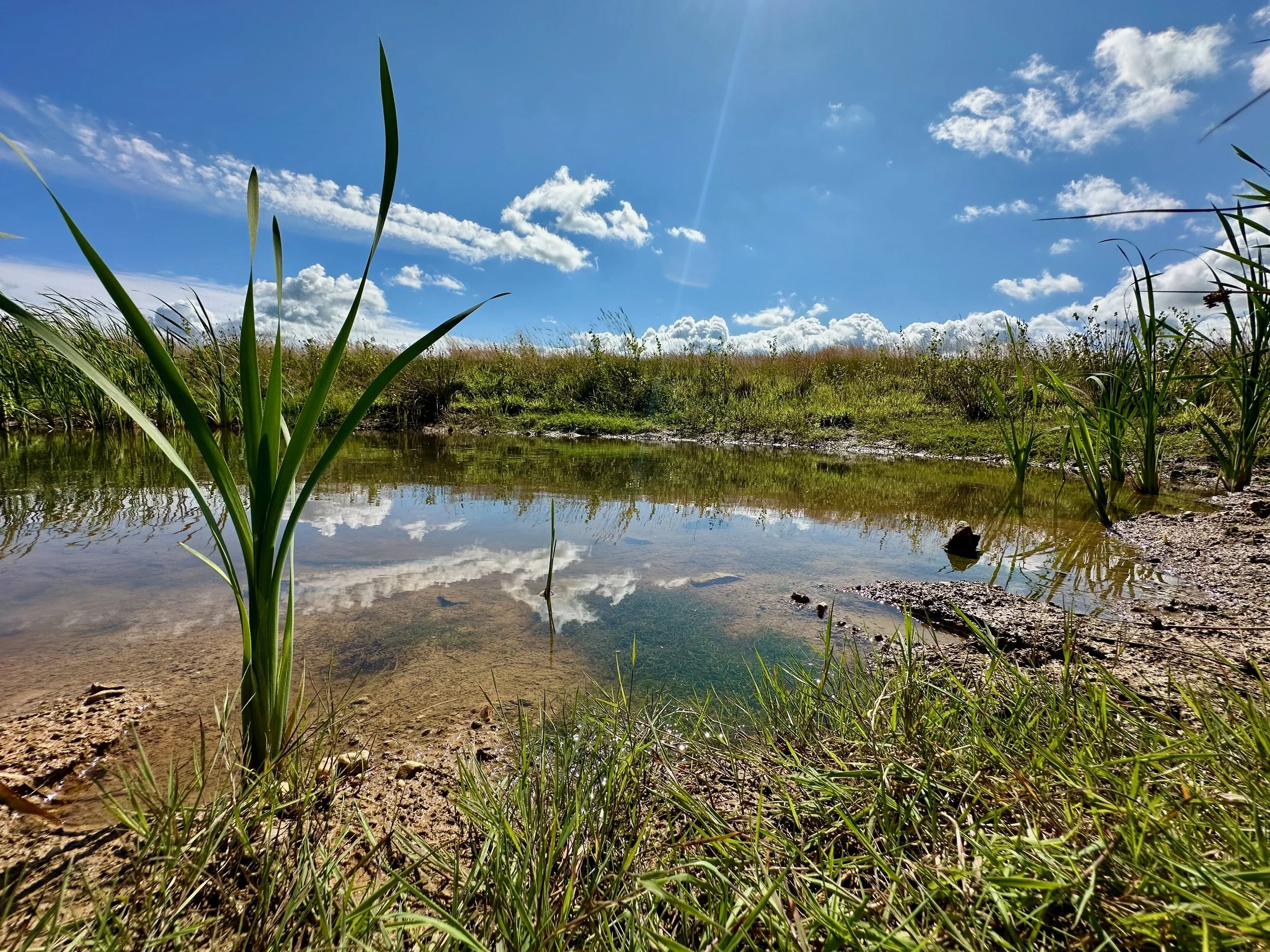
In total, 80 temporary and permanent ponds were created as aquatic habitats, accompanied by more than 90 hectares of habitat restoration. This was carried out to ecologically strengthen existing core areas and to sustainably connect viable populations of the target species through suitable habitat across the surrounding landscape.
The foundation implemented these actions at six sites along the ecological corridor, in the municipalities of Dahlem, Plombières, Aubel, Raeren and Voeren in Wallonia and Flanders.
In the border area with Germany and the Netherlands, near Aachen, four areas on the Belgian side are being established as stepping stones outside Natura 2000 to connect with existing populations of Yellow-bellied Toad (Bombina variegata) in the Netherlands. For this purpose, a network of 48 aquatic habitats for this target species is being created.
Introduction
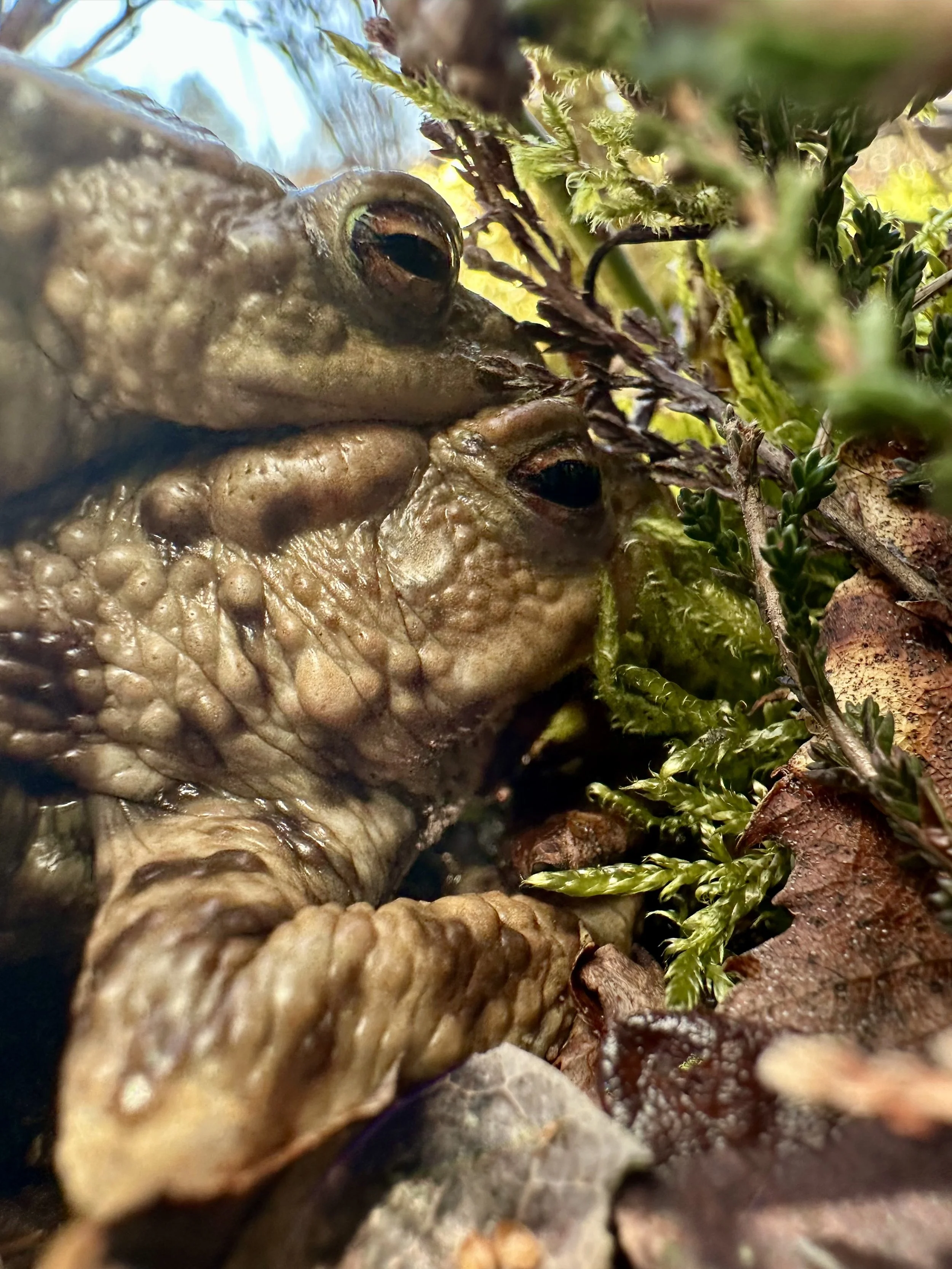
Due to their extreme vulnerability and complex lifestyle, amphibians are considered “The canary in the coal mine” for environmental and climate change. Globally, over 40 % of amphibians are threatened with extinction, clearly demonstrating the crisis they are facing. In the EU, the main threats to amphibians include habitat degradation, habitat fragmentation, climate change, advancing invasive alien species (IAS) and, despite their familiarity, a low public awareness of their challenges, impact people have and how they can contribute to amphibian conservation. By restoring both terrestrial and aquatic habitats, ToadAlly aims not only to improve living conditions for amphibians, but also to benefit many other species. After all, the toad is a signal species, or umbrella species: by restoring their ecosystem, the situation for other species also improves.
The approach we take in the LIFE ToadAlly project is unique in its comprehensiveness, as we will bridge population recovery, habitat restoration, population connectivity, climate adaptation, public and stakeholder mobilisation, and policy integration to yield maximum conservation results within the project perimeter, through collaborations and synergies with projects in NL and DE , in the cross-border three country region (BE-NL-DE) and beyond.
We will restore over 100 ha of key terrestrial habitat, establish 145 shelters in the form of rockpiles or hedges, and restore or establish over 300 ponds, and reintroduce or restock at least 8 populations of target species. By recruiting over 100 local volunteers as local stewards and integrating project objectives in 3 species protection plans Flanders and 3 species action plans in Wallonia, we ensure a long-term after-LIFE impact of LIFE ToadAlly project.
Financed
This project is financed by the LIFE programme of the European Commission and the governmental Agency of Nature and Forests.
Project partners are: Natuurpunt Beheer VZW, Natuurpunt Studie, Elzéard Foundation, Natagora, Agentschap Voor Natuur en Bos.

Project goals
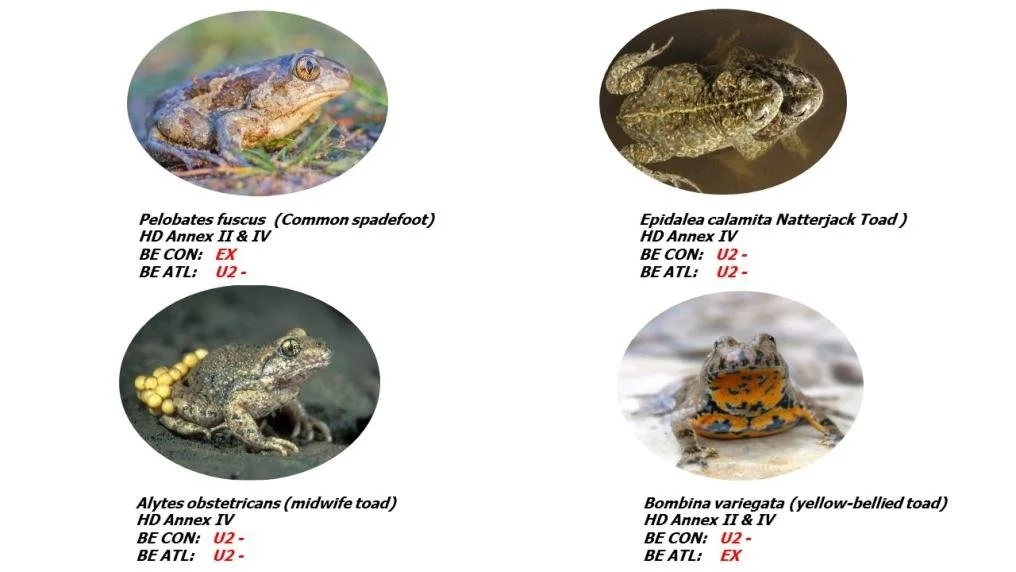
The overall objective of the LIFE ToadAlly project is to improve the conservation status of four highly endangered toad species in the Belgian provinces of Limburg and Liege and beyond. The target species Midwife toad, Natterjack toad, Yellow-bellied toad and the Common Spadefoot depend on increasingly rare dynamic or pioneer habitat and require a broad approach and tailored measures.
How are we going to tackle this problem?
Habitat Restoration and Connectivity
Population Regeneration
Policy Integration and Species Action Plans
Public / Privae / Stakeholder engagement
Project area
In Flanders (B), the project will focus on 10 Natura 2000 sites in the province of Limburg and in the Voer-region enclosed between Liege and the Netherlands. Most sites are located within the Atlantic Biogeographic Region (CBR), with Voeren on the Continental-Atlantic border. The project will also target plots outside the Natura 2000 network, within a maximum buffer radius of 10 km around the targeted sites (see Figure 2 and Table 3). The total area covered by the project in Flanders is 293 952.94 hectares, including 28 808.94 ha hectares of Natura 2000 sites that are of relevance to the target species. This area is the only one in Flanders where the 4 target species have current or historic populations (Yellow-bellied toad is locally extinct in Voeren), and where there are still important core populations which are degrading but have a high potential for improvement.
In Wallonia (B), the project will focus on 11 Natura 2000 sites, primarily in the province of Liège, with one site extending into the province of Luxembourg at the border with Liège. All sites are located within the Continental Biogeographic Region (CBR). The project will also target plots outside the Natura 2000 network, within a maximum buffer radius of 10 km around the targeted sites (see Figure 3 and Table 3). The total area covered by the project in Wallonia is around 233 900.52 hectares, including 5812.45 hectares of Natura 2000 network and the 10 km buffer around those sites. This area is the only one in Wallonia where the 3 target species co-occur (Pelobates fuscus does not occur in Wallonia), and where there are still important core populations which are degrading but have a high potential for improvement. Natagora is well established in the project area, managing over 850 hectares across 53 nature reserves. The Walloon region also boasts 221.18 ha of nature reserves spread across 26 sites.
-
Inland Dunes
Freshwater
Heathland
Grassland
Forest
-
Common spadefoot
Natterjack toad
Yellow-bellied toad
Common midwife toad
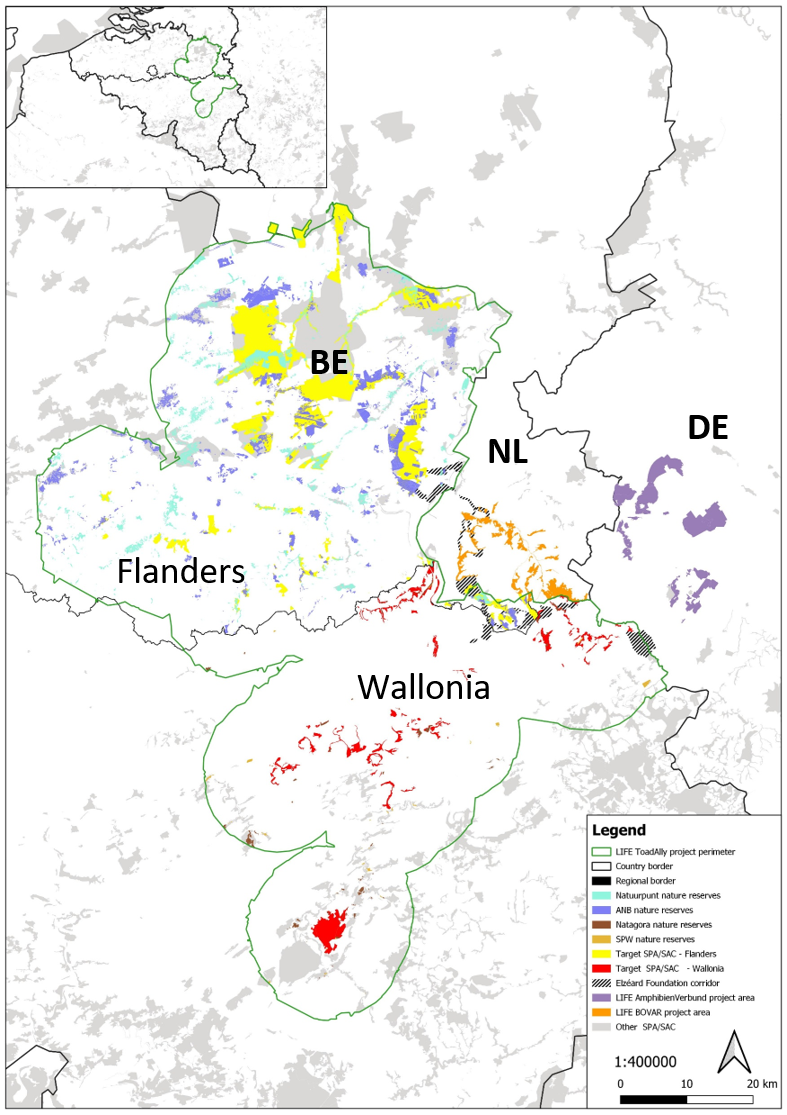
Elzéard Foundation aims at establishing a transnational corridor between the Eifel-Hautes Fagnes National park in the east and the Meuse river and National Park Hoge Kempen in the west through land acquisition with private funding from philanthropy. This corridor will be mapped to connect existing nature reserves, forests and Natura 2000 areas from east to west. Where opportunities exist, new core areas will be created and existing core areas will be enlarged, to increase ecosystem resilience and habitat availability.