
Botanical Restoration & In-situ Nursery Manager
DETAILS
(m/v/x)
Organisation: Elzéard Foundation
Location: Cross-border region.
Belgium, the Netherlands and GermanyEmployment: Full Time Position
Salary: Competitive salary, depending on experience
Start: To be discussed
From seed source to living landscape.
You contribute to building a restoration system in which source populations, seed, propagation, planting, soil and water reinforce one another, so that botanical richness to spread again and support the life that depends on it.
Context
At the heart of this work is the development of a cross-border ecological corridor in the Belgium–Netherlands–Germany region, where fragmented landscapes are reconnected and species and natural processes can begin to organise themselves again.
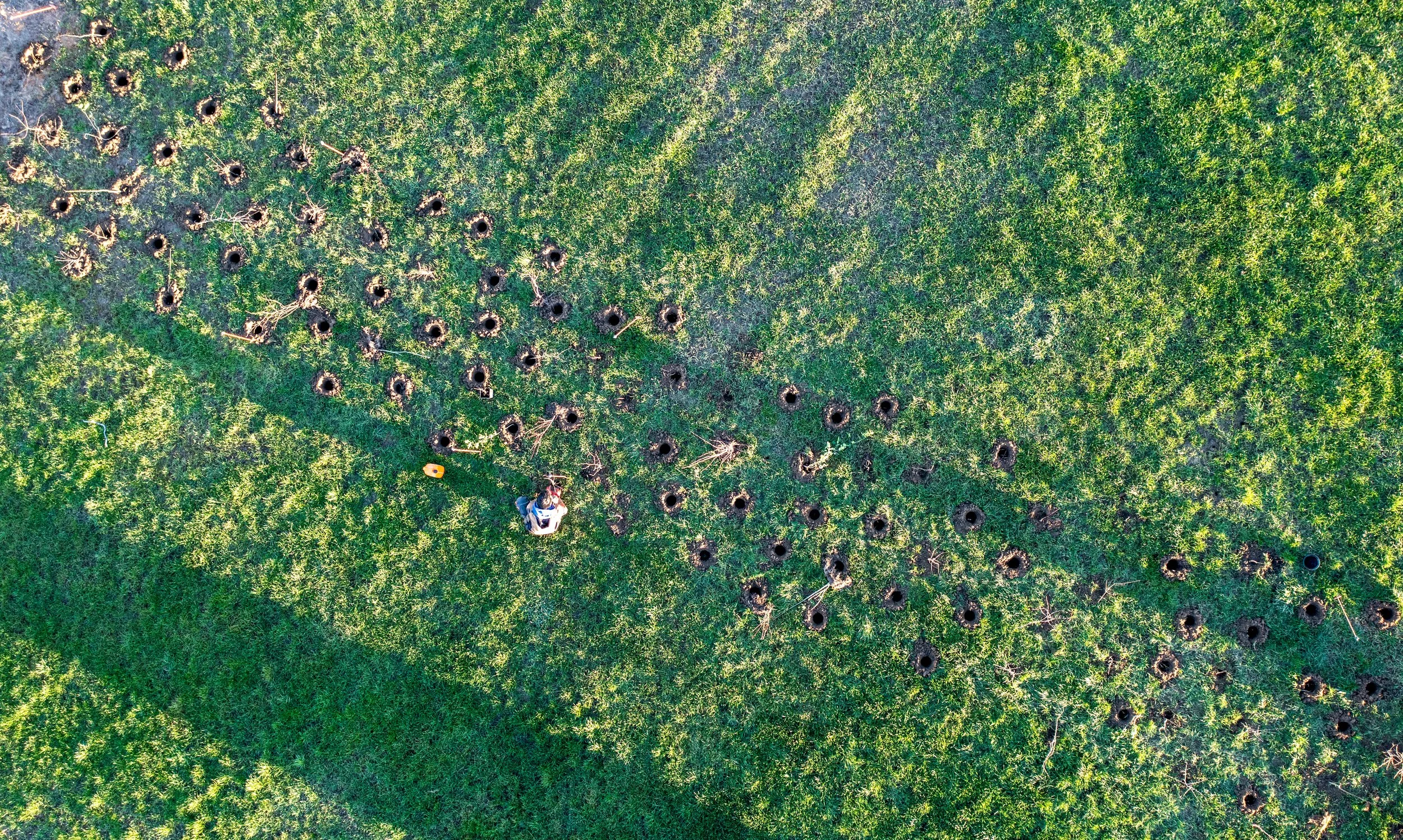
Within our ecosystem restoration programme, Elzéard is developing a unique botanical restoration system: a living chain of source populations, seed collection, propagation, planting, monitoring and follow-up. The in-situ pépinière (distributed nursery system) is not a conventional, centrally located nursery, but a network of strategic restoration nuclei within the landscape itself.
These restoration nuclei function as living seed sources and in-situ genetic reservoirs. They are partly shaped by natural processes and serve both as sources for future seed harvesting and as leverage points for natural seed and plant dispersal within the wider ecological connections. Following the principle of applied nucleation, we bring together local genetic sources, propagation, planting, soil and ecohydrological restoration, and ongoing follow-up in strategically chosen locations.
Elzéard uses a digital restoration system to connect source populations, seed collection, propagation, planting and field results. In this way, botanical restoration does not become a series of isolated actions, but a learning process. The system supports planning, traceability and adaptive management, without replacing field knowledge, seasonal sensitivity or ecological judgement on the ground.
As this botanical restoration system grows, there is a need for someone who can carry the full chain on a day-to-day basis: carefully, practically and with a feel for the living system.
That is why Elzéard is looking for a Manager Botanical Restoration & In-situ Pépinière who will take responsibility for the daily functioning of propagation, the dispersed restoration nuclei, and the practical translation of botanical restoration strategies into fieldwork.
Positioning of the role
This role sits at the intersection of botanical restoration, pépinière work, field implementation and digital process guidance.
You will not be managing a conventional nursery, but helping to build a corridor-wide restoration system in which source populations, seed collection, propagation, applied nucleation, planting, monitoring and adaptation are connected.
You translate the botanical restoration strategy into daily practice: identifying source populations, carefully developing plant material, organising restoration nuclei, preparing plantings, following field results and feeding the digital restoration system.
The digital restoration system is an important backbone in this work: it makes provenance, genetic diversity, timing, location, restoration measures and field results traceable, and helps the restoration chain continue to learn and improve.
Role & responsibility
As Manager Botanical Restoration & In-situ Pépinière, you are responsible for the operational development and daily functioning of Elzéard’s botanical restoration system.
You ensure that the full restoration chain — from seed collection and genetic source populations to propagation, planting and follow-up — is organised carefully, traceably and reliably; always from the question of how this chain gives the living system continuity and the capacity for self-renewal.
You combine practical knowledge of plant cultivation and propagation with insight into ecological restoration and strong organisational skills. You lead the work of the pépinière, guide staff and volunteers, and work closely with the person responsible for field implementation / Field Operations Manager to realise restoration measures successfully on the ground.
You organise not only plants and processes, but also people: staff, volunteers, students, field teams and external experts. You make sure everyone knows what needs to happen, why it matters, and how fieldwork, propagation, registration and follow-up strengthen one another.
You report to the Conservation Lead or the person responsible for conservation and restoration, and ensure that external botanical expertise is translated correctly and practically into concrete actions in the pépinière and in the field.
What you will do
Your role is structured around four core tasks:
1. Organising the botanical restoration system
Coordinate the full nursery-to-nature chain.
Translate botanical restoration objectives into concrete work programmes.
Organise seed collection, cuttings, propagation, planting and follow-up.
Safeguard provenance, quality, genetic diversity and traceability of plant material.
Establish and maintain the in-situ pépinière: dispersed restoration nuclei that function as living gene banks, seed sources and starting points for restoration.
Ensure a careful flow of native plant material, connected to source populations, place, season and restoration objective.
Translate external botanical expertise into practical restoration choices.
Document provenance, choices, results and lessons learned as part of a living knowledge base.
Use and feed the digital restoration system as an instrument for planning, traceability, follow-up and learning.
Contribute to the further refinement of the digital restoration system from daily practice.
2. Leading the propagation work and in-situ pépinière
Be responsible for the daily functioning of propagation, the pépinière and the dispersed restoration nuclei.
Prepare cultivation plans, seasonal planning and work programmes.
Organise maintenance, irrigation, harvesting, logistics and stock management.
Safeguard quality, health, provenance, timing and continuity of propagation.
Manage materials, infrastructure and supplies.
Continuously improve working processes and nursery methods.
Align propagation and the development of in-situ restoration nuclei with soil, water, place, season and corridor logic.
3. Supporting people, collaboration and implementation
Lead nursery staff, volunteers, students and temporary workers.
Distribute work, set priorities and ensure that daily implementation remains clear and feasible.
Collaborate with field teams and the person responsible for field implementation / Field Operations Manager on plantings, restoration actions and field follow-up.
Coach staff and volunteers in plant care, seed harvesting, propagation, registration and careful field practice.
Ensure a safe, structured and quality-oriented working environment.
Help people understand the why of the work: provenance, timing, genetic diversity, field knowledge and ecological follow-up.
Ensure that implementation, field knowledge and the digital restoration system strengthen one another.
4. Learning & improving
Follow up on the results of plantings and restoration measures.
Contribute to testing and refining restoration methods.
Identify bottlenecks and develop practical solutions.
Contribute to the further professionalisation of the botanical restoration system.
Build a learning system in which field observations flow back into seed collection, propagation, species selection, planting strategy and adaptation.
Maintain contact with external experts, partners and knowledge institutions.
Contribute to Elzéard’s knowledge continuity around botanical restoration, so that insights remain transferable to future staff and restoration generations.
Use the digital restoration system as a learning feedback loop between field results, propagation experience and new restoration choices.
Profile
We are looking for someone who combines a strong affinity with ecological restoration with organisational drive, practical care and the ability to make a living restoration system more reliable step by step. More specifically:
You have an affinity with native flora, ecological restoration and natural processes.
You are strong in organising and make sure that plans are actually carried out.
You work accurately and have an eye for quality and detail.
You can guide, motivate and provide structure to people.
You like to lead in a practical, calm and clear way, close to the work and with respect for people, place and season.
You think systemically while remaining practically oriented.
You understand that botanical restoration at Elzéard is not only about producing plants, but about restoring living relationships between plants, soil, water, pollinators, source populations, landscapes and future generations of human and more-than-human life.
You can work with uncertainty, seasonal rhythms and slow ecological feedback, and you know when adaptation is needed and when waiting is the right choice.
You are a problem-solver who takes responsibility.
You feel comfortable in an environment where systems and processes are still evolving.
You work carefully with digital follow-up and data, because good registration helps make ecological choices traceable, learnable and transferable.
You can work from humility towards natural processes and leave room for what the living system itself shows.
You enjoy working both outdoors and in an operational coordinating role.
What you bring
Experience in plant nursery work, nature management, ecological restoration, horticulture or a comparable practical environment.
Knowledge of plant cultivation, seed harvesting, cuttings or plant propagation is a strong asset.
Experience in organising work and leading people.
Sufficient knowledge of ecosystems, vegetation development or ecological restoration to assess restoration choices practically and ecologically.
Strong organisational skills and a good sense of planning.
Experience with digital registration, planning tools or data-informed follow-up is an asset.
Driving licence B.
Good command of Dutch. French and/or English are an asset.
What we offer
A key role in a unique corridor-wide botanical restoration system, from source population and seed collection to propagation, planting, follow-up and restoration.
The opportunity to further develop the in-situ pépinière as a living infrastructure for botanical restoration, applied nucleation and corridor development.
A high degree of autonomy within a clear ecological direction, with room for initiative, ownership and responsibility.
A working environment in which craftsmanship, quality, learning and long-term responsibility are central.
A small and committed team where collaboration is direct, informal and based on shared intention.
The opportunity to become part of a wider international movement around rewilding, deep ecology, landscape restoration and new forms of stewardship.
The possibility to explore accommodation within the project area or the surrounding cross-border region, depending on availability and mutual agreement.
What success looks like after 1-2 years
The pépinière no longer functions as a separate nursery, but as a corridor-wide dispersal system that restores botanical complexity, allow species to move more freely again, and increases the ecological strength of the corridor.
The propagation work functions as a stable, reliable and well-organised operational system.
Staff, volunteers and interns work within clear processes and responsibilities.
The nursery-to-nature chain is fully operational and traceable.
A high-quality, traceable and ecologically appropriate flow of native plant material supports restoration projects in the landscape.
The pépinière functions as a learning system: field results, source populations, propagation experience and restoration objectives increasingly reinforce one another.
The digital restoration system is used consistently as the backbone of the nursery-to-nature chain.
Provenance, genetic diversity and living knowledge are documented in such a way that the botanical restoration system remains transferable and resilient in the long term.
Applying?
If you feel addressed by the intention of this project and the nature of the role, we invite you to apply.
You do not need to meet every point in this vacancy perfectly in order to be a valuable candidate. Some knowledge grows through practice; what matters more is that you work carefully, take responsibility, enjoy learning and feel that this role resonates with you. If you believe you can make a meaningful contribution to this botanical restoration system, we would be glad to hear from you.
